AI That Reduces Friction Before You Press Call
Summary
Before you dial a customer care number, Google Phone already analyzed the business, estimated wait time, and surfaced busy-hour patterns — practical AI embedded in everyday workflows.
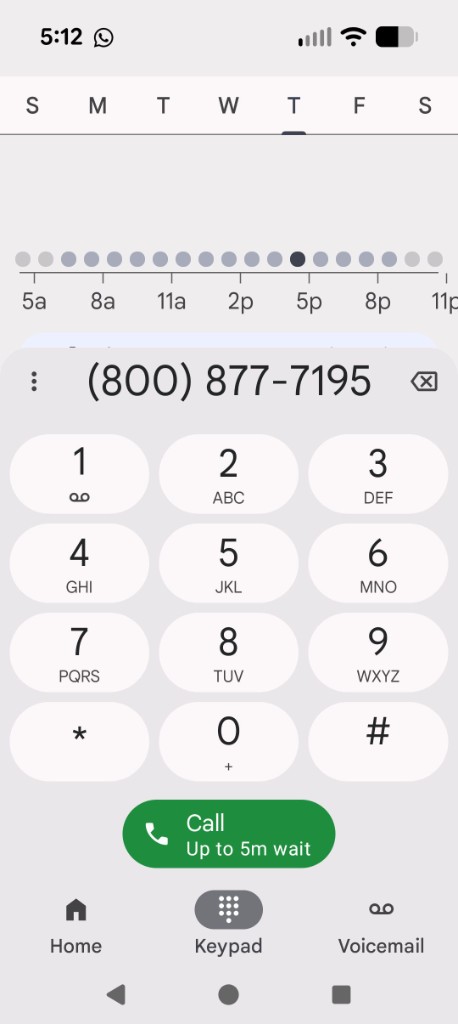
If there are still questions about whether AI will enhance daily life, consider a straightforward example from a phone call I made recently.
Before I pressed call, Google Phone performed several background analyses:
- Determined if the number is associated with a business
- Identified if it's a customer care number
- Assessed whether it belongs to a large chain or a small business
- Provided the local time and estimated wait time before the call
This isn't theoretical AI — it's a practical application integrated into everyday tasks. While Google Search has incorporated similar features for years, embedding this functionality directly into the phone experience and making it seamless is a recent development.
There's no need for an additional search or extra effort — it's all built into the workflow.
How real disruption happens
Not through hype, but by gradually replacing minor human tasks at scale. AI may not replace everything overnight, but it will continue to reduce friction in everyday decisions, one small feature at a time.
Related reading
The LLM Should Not Own Portfolio Risk
Bedrock for language and tool selection; C# for allocations, HHI, and stress. IAM, Guardrails, and IChatClient as separate layers — not a chat wrapper.
Your AI Coding Assistant Shouldn't Be Your Company's Knowledge Layer
Why does every AI coding assistant rediscover how your company works? A platform-engineering build guide for financial services on Context as a Service — enterprise context plane, MCP gateway, and organizational truth plus local branch context for Cursor, Copilot, and Claude Code.
AI-DLC Is Just Structured Prompts — What I Learned Trying AWS Labs aidlc-workflows
AI-DLC is structured prompts in .cursor/rules — but audit.md and aidlc-state.md are the real wins. A credible AI strategy for teams that do not want to build MCP servers, custom agents, or workflow orchestration from scratch.